
REVIEW · NEW ZEALAND
InterIslander Ferry – Picton to Wellington
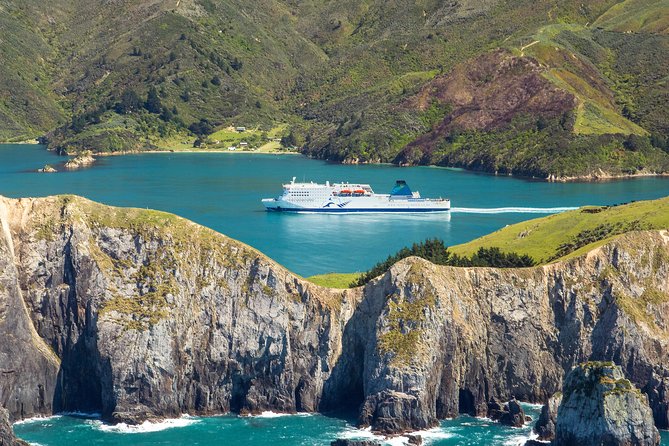
The best part of this crossing comes before you reach open water. The ferry slips out of Picton through Queen Charlotte Sound, where wooded hills and calm inlets make a fine start to the trip. I like the generous baggage allowance and the choice to bring a car or travel on foot. The main drawback is that the trip can lose much of its scenic appeal in cold, windy weather.
I also like that this is a useful link, not just a boat ride. You get cafés, lounge areas, viewing decks, and enough room to move around during the 3.5-hour crossing. But you need to check in early, confirm that your booking covers your vehicle if you have one, and allow for timetable changes.
Key points to know before you book

- Queen Charlotte Sound is the scenic highlight: You get the best views during the first part of the journey from Picton.
- The crossing takes about 3 hours 30 minutes: This is a practical alternative to flying between the islands.
- You can travel with a car or as a foot passenger: Ticket types and prices differ, so check exactly what your booking includes.
- Two 23kg bags per person are included: Larger bags must be checked at the terminal.
- Open decks make the trip worthwhile on a clear day: Wind and rough water can change the experience quickly.
- Early check-in matters: Arrive at least 60 minutes before departure and confirm the sailing time on the day.
Leaving Picton through Queen Charlotte Sound
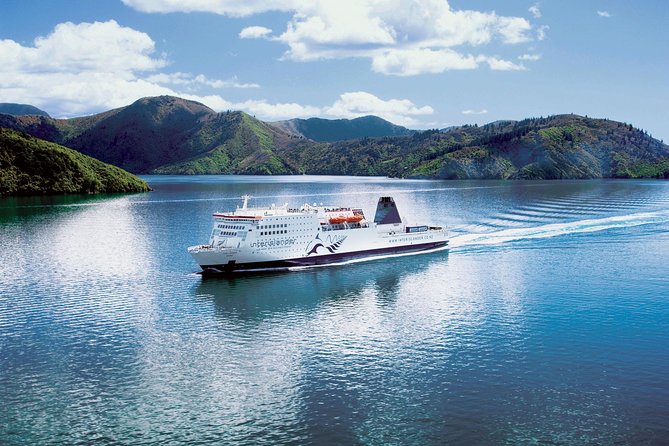
The ferry departs from Picton Port on Auckland Street, close to the town centre and Picton railway station. If you arrive by train, the terminal is only a short walk away, though the walk to the ship itself can involve a long, covered route and some stairs.
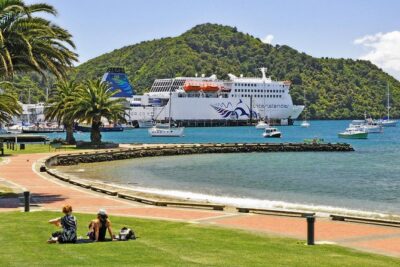
The early part of the trip is the prettiest. The ferry moves through Queen Charlotte Sound, a calm stretch of water framed by forested hills and small bays. I would head outside soon after departure, even if you plan to spend most of the crossing indoors. This is the section where you get the strongest sense of leaving the South Island behind.
The viewing decks are included in your fare. Upper decks offer broad views, but they can be cold and windy, even on a generally pleasant day. Bring a warm layer and do not count on staying outside for the entire crossing. When the weather turns, you can retreat to one of the indoor seating areas and watch the water through the windows.
A useful tip is to ask for a map or route guide if this is your first crossing. It helps you understand where you are as the ferry leaves the Marlborough Sounds and heads toward Cook Strait. The route is much more interesting when you can follow the change from sheltered water to open sea.
A few more ferry trips around New Zealand worth a look
- Waiheke Island: Ferry & Hop-On Hop-Off Explorer Bus Tickets
★ 4.6 · 3,311 reviews - InterIslander Ferry – Wellington to Picton
★ 4.0 · 417 reviews - Auckland: Tiritiri Matangi Island Ferry
★ 4.7 · 133 reviews
The Cook Strait crossing takes patience
Once the ferry leaves Queen Charlotte Sound, the scenery becomes wider and less detailed. You may see both islands in the distance, but this is not a nonstop sightseeing cruise. From Picton, the most intimate views usually last around 45 minutes before the ferry reaches open water.
That does not make the crossing dull. The ship gives you space to walk, eat, read, watch a film on selected vessels, or settle into a lounge chair. The InterIslander fleet includes the Kaitaki and Kaiārahi, and facilities can vary by ship and sailing. On off-peak departures, some services may only open for part of the journey.
Sea conditions also shape the trip. A calm, sunny crossing can feel relaxed and spacious, with excellent views from the upper decks. Wind, cloud, and rough water can push you indoors. The ferry is a good choice if you dislike the possibility of a bumpy flight, but it is not immune to movement. If you are prone to seasickness, choose a stable indoor seat and keep the open deck time flexible.
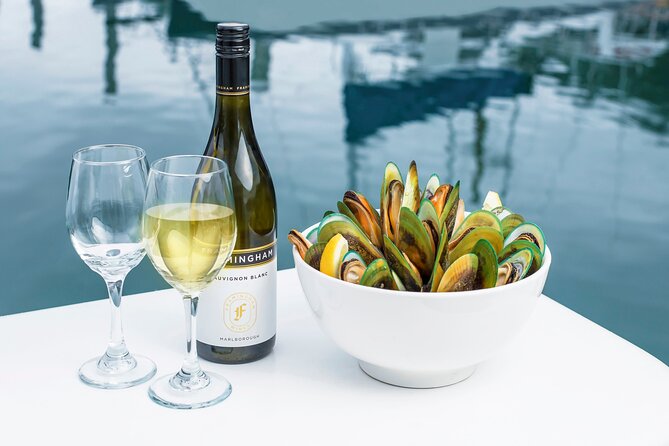
The ship has cafés, a fast-food takeaway bar, drinks, lounge seating, and a children’s play area with a nursery. Food and drinks are not included in the basic fare. You can buy meals, coffee, snacks, and drinks onboard, though queues for coffee can be long at busy times. Food options are generally useful for a journey of this length, but passengers with special diets should check what is available, as gluten-free choices may be limited.
Wi-Fi is not guaranteed to work well onboard. Plan to download anything you need before sailing rather than relying on an internet connection across Cook Strait.
Arriving beside Wellington Harbour
The final approach to Wellington is the other memorable part of the journey. After the open water, the ferry enters Wellington Harbour, with hills surrounding the city and the capital coming into view ahead. The setting gives you a much more gradual arrival than an airport transfer.
The ferry ends at Wellington Ferry Terminal on Aotea Quay in Pipitea. From there, you can continue into Wellington by public transport or other local connections. A shuttle has also been offered on the Wellington side for some foot passengers, but you should confirm current arrangements before relying on it.
If you have a rental car, pay close attention to the disembarkation process. A delayed arrival or a late-night sailing can make collecting a vehicle less convenient, especially if you are unfamiliar with the terminal. The ferry itself is straightforward, but the final connection is part of your planning.
Wellington gives you easy access to Te Papa Tongarewa, restaurants, shops, theatre, and central city sights. If you arrive with time to spare, the ferry is a pleasant way to begin exploring rather than flying into the city and dealing with an airport transfer.
Foot passenger or vehicle ticket?

You can book this crossing as a foot passenger or take a car onboard. The choice makes a major difference to the total cost and to how much freedom you have after arrival.
At around $58.77 per person, the foot-passenger fare can be good value for a one-way island connection. It includes access to the viewing decks and two pieces of baggage weighing up to 23kg each. For someone moving between Picton and Wellington with luggage, the ferry can be simpler than arranging separate airport transport and paying for checked bags.
A vehicle booking costs more, and you must make sure the car is included in the reservation. Do not assume that a passenger booking automatically covers a vehicle. Extra charges may apply for cars, bicycles, canoes, surfboards, and other large sporting equipment.
The ferry is especially useful if you are touring New Zealand by car. You can keep the same vehicle as you move between islands instead of arranging a second rental. The trade-off is the higher fare and the need to arrive early for vehicle check-in.
If you are travelling with a bicycle or sports equipment, ask about the extra charge before you reach the terminal. These items are not automatically covered by the standard baggage allowance.
Same water, a different way across:
- Wanaka: Water Taxi & Mou Waho Island Tour
★ 4.8 · 299 reviews - Wanaka Water Taxi Mou Waho Island Tour
★ 5.0 · 217 reviews - Paihia: Hole in the Rock Fast Boat Ocean Adventure
★ 4.7 · 132 reviews - Auckland to Rangitoto Island Ferry
★ 4.0 · 109 reviews
Baggage rules that can save you trouble
The standard allowance is two bags per person, with each item limited to 23kg. A single bag cannot exceed 23kg for safety reasons, and the maximum size is 200 linear centimetres, meaning height plus length plus width.
Large backpacks and other oversized pieces must be checked at the Picton terminal. You collect them from the baggage carousels when you arrive in Wellington. Keep medication, travel documents, valuables, and anything you need during the crossing in a smaller carry-on bag.
Additional bags may be accepted if space is available, but an extra charge applies. Sporting equipment has separate rules, and bicycles may also cost more. If you are bringing a dog, kennels can be purchased at the terminal, but the number of kennels is limited. Service animals are allowed.
For families, children aged 2 through 17 qualify for the child rate. Children aged 15 and younger must travel with an adult. Anyone aged 17 or under cannot use the Premium Lounge.
Premium Lounge or standard seating?

Standard seating is enough for most people. You get access to indoor areas, cafés, the viewing decks, and the ship’s general facilities. There are several seating areas, so you do not have to remain in one place for the whole crossing.
The Premium Lounge is an optional upgrade. It offers a quieter setting and includes food and drinks, making it appealing if you want a more contained and comfortable trip. It can be worthwhile on a long or poorly timed crossing, particularly if you value included meals and a dedicated place to sit.
The lounge is not especially large, and seating may feel only moderately comfortable when it is busy. First-time passengers may also need clearer directions to find it. I would not pay extra simply because you expect a luxury cruise. Choose it for the food, drinks, and calmer setting, not for a grand shipboard experience.
Standard passengers can make the trip comfortable by choosing a good indoor seat, buying food during a quieter period, and going outside when the scenery improves. If you are on a tight budget, the basic fare offers the better value.
Boarding, delays, and timing
Plan to arrive at least 60 minutes before departure. This matters for both foot passengers and people travelling with vehicles. The departure lounge can involve a wait after check-in, sometimes close to an hour, so bring water, a snack, and something to read.
Check the sailing time carefully on the day of travel. Timetables can change without notice, and a printed or third-party ticket may not always reflect the latest departure time. Delays and cancellations can occur, including long delays that affect a full day of your itinerary.
The operator may reschedule you if a sailing is cancelled. Poor weather can also lead to a cancellation, in which case you may be offered another date or a full refund. Because the crossing is affected by wind and sea conditions, avoid arranging a tight connection immediately after arrival.
The terminal experience is functional rather than polished. Boarding may involve stairs, ramps, and a long walk from the check-in area. If stairs are difficult for you, ask staff for assistance before boarding. Most people can take part, and the service is near public transport, but you should still allow extra time if you need help with luggage or mobility.
Who will enjoy this ferry most?
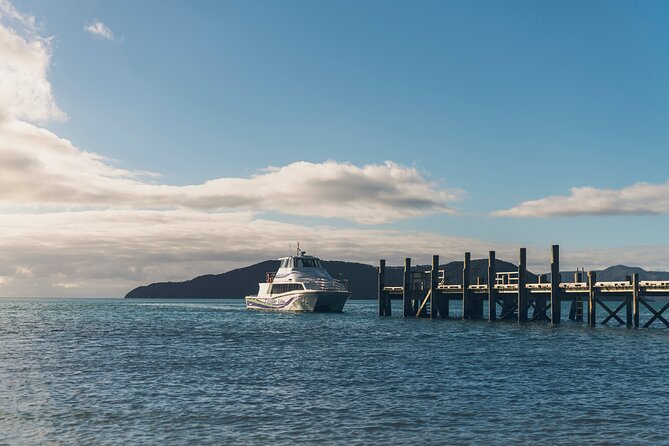
I would choose the InterIslander for anyone travelling between Picton and Wellington who wants a relaxed alternative to flying. It works particularly well for road trips, families with luggage, and people who prefer to carry their own bags without airline-style restrictions on every small item.
It also suits anyone who enjoys watching the scenery change. The first section through Queen Charlotte Sound and the final approach to Wellington Harbour are genuinely rewarding on a clear day.
You may prefer flying if speed matters more than the journey itself. The ferry takes about three and a half hours before you add check-in and terminal time. You should also think twice if you strongly dislike rough water or need a guaranteed departure time.
Smokers must use designated areas, since smoking is not permitted inside the ship. Children have access to a play area and nursery, though facilities may have limited opening hours on off-peak sailings.
Is the $58.77 fare good value?
For a foot passenger, the listed fare is reasonable for a major island connection, especially with two 23kg bags included. You also get access to the decks and the full crossing without having to arrange separate transport between Picton and Wellington.
The value changes when you add a vehicle, premium seating, extra bags, sporting equipment, or a pet kennel. Check every line of the booking before paying. The most expensive mistake is arriving with a car when the reservation covers only passengers.
Food is extra, but you have the option to buy meals and drinks onboard. If you want to control costs, bring suitable snacks where permitted and avoid assuming that the Premium Lounge is necessary.
The trip earns its value from convenience and scenery rather than speed. On a sunny day, the views make the journey feel like part of your holiday. In rough or cloudy weather, it becomes simple transport with decent seating and useful facilities.
Should you book the Picton to Wellington InterIslander?
Book it if you are moving between New Zealand’s two main islands, carrying substantial luggage, or taking a car with you. The views through Queen Charlotte Sound and into Wellington Harbour are the strongest reasons to choose the ferry, while the cafés, lounges, and open decks make the long middle section manageable.
I would book the standard fare for most people and consider the Premium Lounge only if included food, drinks, and a quieter area matter to you. Arrive early, check the current sailing time, confirm your vehicle is listed, and pack a warm layer for the deck.
Skip it only if you need the fastest possible connection or cannot tolerate a weather-sensitive journey. For everyone else, this is a practical, scenic link between the South and North Islands, with enough comfort to make the crossing feel like part of the trip.
FAQ
How long does the Picton to Wellington ferry take?
The crossing takes approximately 3 hours and 30 minutes.
Where does the ferry depart from in Picton?
It departs from Picton Port on Auckland Street, Picton 7281, New Zealand.
Where does the ferry arrive in Wellington?
The ferry arrives at Wellington Ferry Terminal, 1 Aotea Quay, Pipitea, Wellington 6011.
Can I take a car on the ferry?
Yes. You can choose a vehicle ticket, but you must make sure the car is included in your booking. A passenger ticket alone does not necessarily cover a vehicle.
How much luggage is included?
Each person can bring two pieces of baggage, with each item limited to 23kg. Additional baggage may be accepted for an extra charge, subject to availability.
Are food and drinks included?
No. Food and beverages are available to purchase onboard. The Premium Lounge includes food and drinks as part of that upgrade.
Can I bring a bicycle or sporting equipment?
Bicycles and sporting equipment, including items such as canoes and surfboards, may incur an additional fee payable at the terminal.
Are pets allowed on the ferry?
Kennels may be purchased at the terminal for travelling animals. Kennels are limited and cost extra. Service animals are allowed.
What happens if bad weather cancels the crossing?
If the experience is cancelled because of poor weather, you will be offered another date or a full refund. The sailing timetable can also change without notice.
Just added around New Zealand
- Kepler Track Water Taxi★ 5.0 · 43 reviews
- Ocean Adventure: Fast Boat to the Hole in the Rock★ 4.5 · 35 reviews
- Waiheke Reserve Ferry Service to Waiheke Island★ 4.5 · 9 reviews
- Man O’ War Winery on Waiheke Island – Ferry from Auckland★ 3.0 · 2 reviews
- Rotoroa Island Ferry – from Auckland★ 5.0 · 8 reviews
- Paihia: Hole in the Rock Fast Boat with Island Stopover★ 4.5 · 10 reviews
- Auckland: Man O’ War Vineyard Ferry (Waiheke Island)★ 4.3 · 10 reviews
- Milford Track Multi-Night Hike – Water Taxi Transport★ 5.0 · 58 reviews
New Zealand Ferry Trips, compared.

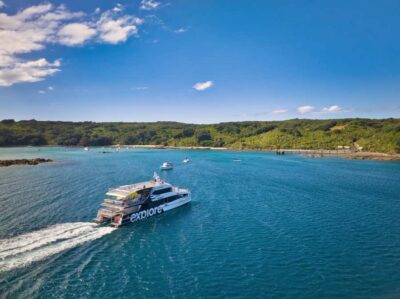
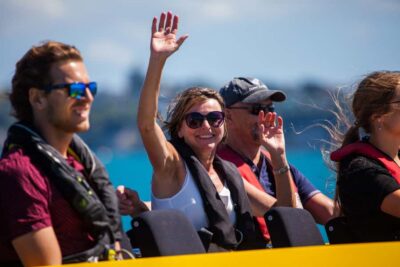
Paihia: Hole in the Rock Fast Boat Ocean Adventure
Read our review →
Milford Track Multi-Night Hike – Water Taxi Transport
Read our review →Browse the lists this tour appears in