
REVIEW · USA
Harpers Ferry Audio Tour History, Ruins and River Views
Harpers Ferry packs an astonishing amount of American history into a small, steep town. This GPS-guided audio walk leads you from the Potomac and Shenandoah rivers to John Brown’s Fort, Civil War overlooks, former industrial ruins, and the Appalachian Trail.
I like the freedom to pause at a marker, take in a view, or skip ahead without waiting for a guide. I also like that the app starts the narration as you reach many locations, making it easier to connect what you see with what happened there. The catch is the hilly route. Two hours is an estimate, and the full circuit may be too demanding if uphill walking is a concern.
Key points to know before you go
- GPS-triggered storytelling: The audio begins as you reach many stops, so you can look around instead of constantly checking your phone.
- A serious historical range: The route covers John Brown, the Civil War, Black education, industry, railroads, and the Appalachian Trail.
- Expect steep walking: Jefferson Rock, St. Peter’s Church, Storer College, and the Appalachian Trail staircase require climbing.
- Download before arrival: Cell service can be weak, so save the app and tour content in advance.
- The route begins at Lower Town Train Station: It ends back at the same meeting point, with 19 listed stops along the way.
- The price is modest: At $9.99 per person, it costs less than many live tours, but its value depends on your comfort with self-guided walking and phone navigation.
Why this audio tour works well in Harpers Ferry
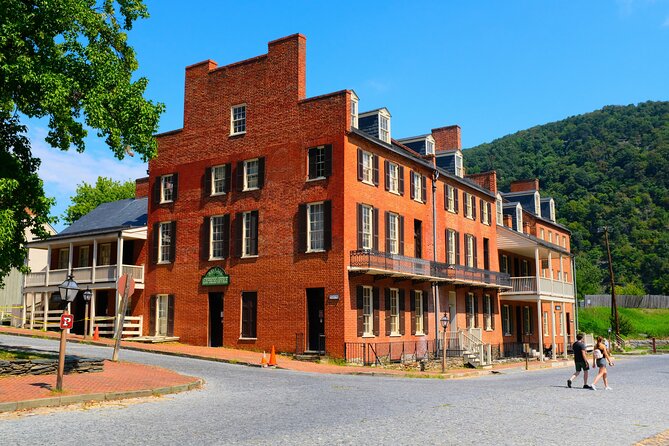
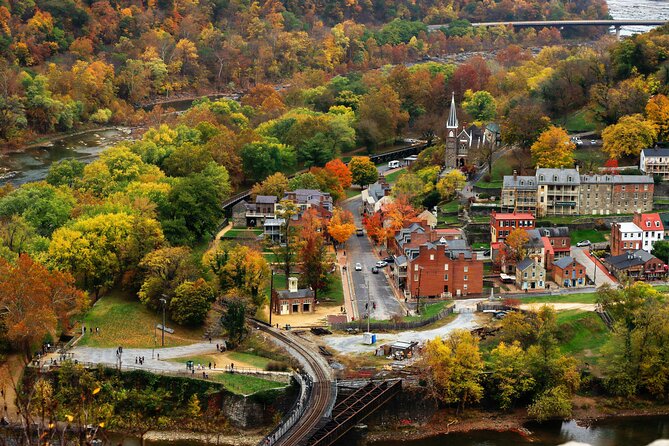
Harpers Ferry is not a place you understand from one viewpoint. The town’s story shifts as you move between the rivers, steep hills, ruins, churches, armory sites, and old homes. A self-guided format fits that layout better than a rigid group walk in some ways. You can stop for a photograph, read a sign, or take a breather without holding anyone up.
The app adds a spoken layer to places that can otherwise look like scattered foundations or ordinary buildings. When you reach the US Armory Site, for example, the remains do not immediately reveal how important the weapons works once was. The narration gives the ruins a larger meaning, linking them to John Brown’s raid and the national crisis over slavery.
The tour is offered in English and is designed for your own group rather than a shared departure. You bring your own smartphone, download the app and tour before going, then begin at Lower Town Train Station, 182 Potomac Street. The stated duration is about two hours, but that assumes a fairly steady pace and does not leave much room for a long museum visit, lunch, or extended rest stops.
The route has a current rating of 4.4 from seven ratings. That number suggests a generally strong product with a few practical limits, especially around the app interface and the amount of uphill walking.
A few more ferry trips around the USA worth a look
- Boston Historic Taverns Tour with Tastings and Ferry
★ 5.0 · 156 reviews - Boston: Historic Pubs Walking & Ferry, Food & Drink Tour
★ 4.9 · 56 reviews - Halifax: Georges Island National Historic Site Ferry Ticket
★ 4.9 · 28 reviews
Lower Town Train Station and Harpers Ferry’s beginnings
Starting at the Lower Town Train Station gives the tour a useful opening point. The station is still active, and its presence explains why this small town became a major transportation link. Rail travel helped connect Harpers Ferry to a wider region, just as the rivers once carried goods and people.
From there, the route reaches the original site of the Shenandoah River Bridge. Robert Harper’s 18th-century ferry began the town’s story, long before the area became known for armories, battlefields, and civil rights history. I like this early stop because it puts the town’s development in practical terms. Water crossings create trade routes, and trade routes attract industry, politics, and conflict.
Harpers Ferry Public Square brings you into the center of town life. Markets, militias, protests, and parades all passed through this space. The square is a good place to slow down and notice how compact Lower Town is, even though the wider route soon sends you up steep grades and along wooded paths.
The route also includes White Hall Tavern, once a gathering place for residents, visitors, and Union soldiers. It gives the story a human scale. Large events began with ordinary conversations, meals, drinks, and arguments in places like this.
John Brown’s Fort and the armory story
The US Armory Site and Arsenal Square form the heart of the John Brown section. The armory once produced weapons for the United States, but little remains beyond foundations and open spaces. That absence is part of the challenge. You need the audio and the site markers to picture the sprawling facility that once occupied the area.
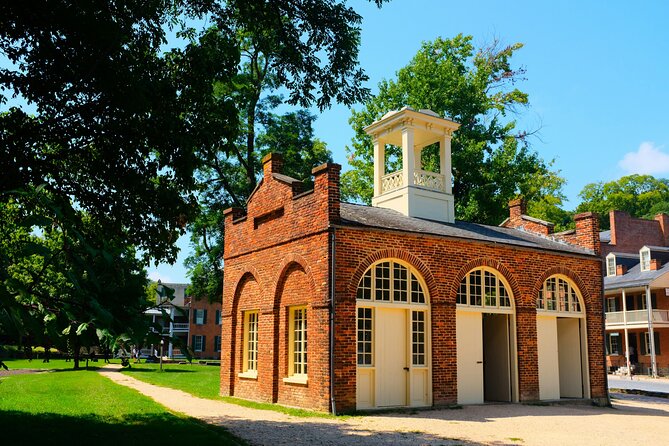
John Brown’s Fort is more immediately recognizable. The brick building was originally a fire engine house, then became the final stronghold of Brown and his followers during the 1859 raid. The building is modest. The event was not. Brown’s attempt to seize weapons and encourage an uprising helped sharpen the national conflict that soon became the Civil War.
The tour treats these locations as connected rather than isolated photo stops. Arsenal Square shows where the action began, while the fort gives you a physical place tied to its final phase. I find that sequence useful because it turns a famous name into a series of locations you can actually walk between.
The Harpers Ferry Historical Museum adds everyday detail through hands-on displays and unusual objects. It covers daily life as well as major events, which helps balance the more dramatic John Brown material. Admission for the listed stops is free, but keep in mind that museum access can change.
Black education, civil rights, and a closed museum
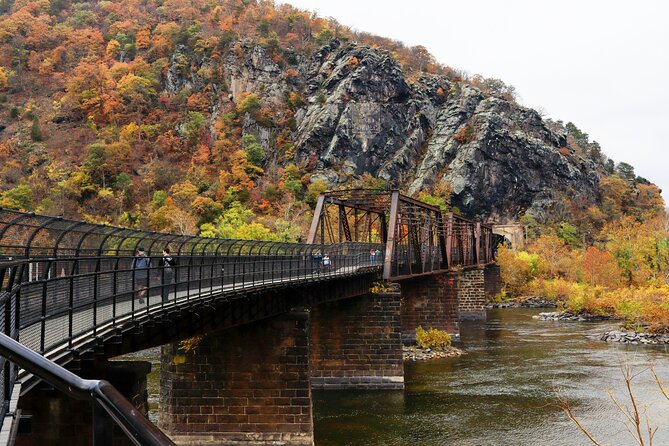
One of the most important themes on this route is the story of African Americans in Harpers Ferry. The planned stop at the museum devoted to African American life is currently closed for renovations, so you should not count on entering it during your visit. Even without that interior stop, the audio route still reaches places tied to Black education and public life.
Lockwood House once served Union officers and later housed leaders connected with Storer College. Storer College was founded after the Civil War to educate formerly enslaved people. The campus became a center for learning, leadership, and civil rights during the Reconstruction era.
Murphy Farm adds another layer. It was once a battlefield, then became a setting for major civil rights speeches. Today, it offers open views and a quieter place to think about how the same ground can carry different meanings over time.
This part of the tour is especially valuable because it prevents Harpers Ferry from becoming only a John Brown or Civil War destination. You hear about education, freedom, and the long work of building opportunity after slavery. The closed museum is a real limitation, but the remaining sites still give the route a broader purpose.
Same water, a different way across:
- New York City: Statue of Liberty & Ellis Island with Ferry
★ 4.6 · 18,683 reviews - Muir Woods and Sausalito (Return by Bus or Ferry)
★ 4.5 · 5,098 reviews - Water Taxi All Day hop-on hop-off Venice of America Boat Tour
★ 4.5 · 3,932 reviews - Fort Sumter Admission and Self-Guided Tour with Roundtrip Ferry
★ 4.5 · 3,343 reviews
Cemetery views, churches, and the uphill route
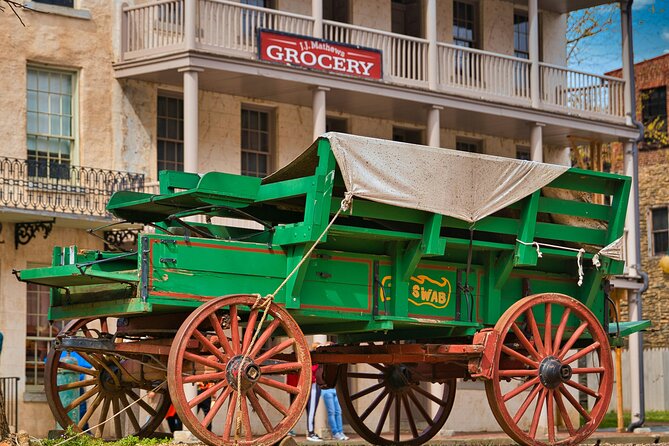
Harper Cemetery sits above town and combines quiet surroundings with wide views. Soldiers, local residents, and other figures connected to Harpers Ferry are buried there. The stop is brief, only about five minutes in the planned timing, but you may want longer if you enjoy cemeteries or want to look back across the town.
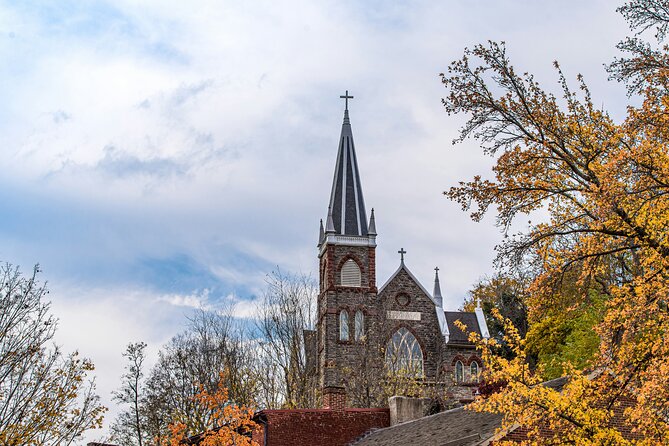
St. Peter’s Roman Catholic Church is another hillside stop. Its stone structure served Irish immigrant families and survived the Civil War. The church represents a different part of Harpers Ferry’s past, one tied to immigration, faith, and shelter rather than weapons or military command.
These stops also show why you should think of the tour as a walking route, not simply an audio program. The hills are part of the story, but they are also a physical demand. One person using the app enjoyed the automatic location triggers but stopped before finishing because the uphill hiking became too much. If you have limited stamina, plan to take your time and accept that you may see only part of the route.
The Appalachian Trail staircase makes that point plainly. The steep steps connect Lower Town with the Appalachian Trail and offer a scenic, demanding climb. You get a literal change in viewpoint as you rise above town, but this is not a flat stroll.
Jefferson Rock and river views
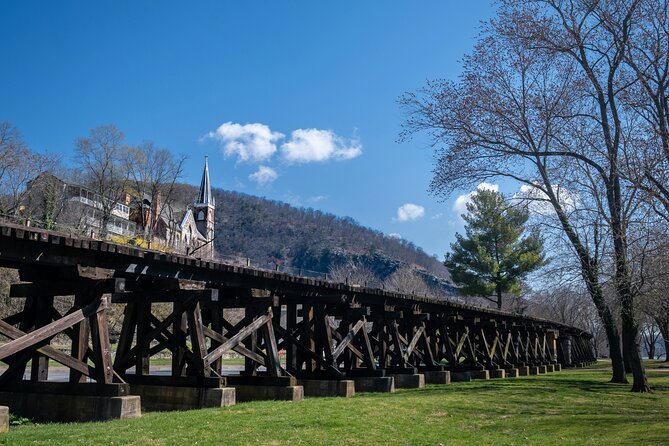
Jefferson Rock is one of the route’s best-known viewpoints. Named for Thomas Jefferson, the cliffside perch lets you look across the rivers and surrounding hills from a position that has long attracted attention. The audio gives the view historical meaning, but you will still want a moment without the phone in your hand.
The Point is the natural high point of the river story. Here, the Potomac and Shenandoah meet. Geography made Harpers Ferry useful for trade, travel, and military strategy, and the river junction helps you see why the town mattered far beyond its size.
These two stops are among the strongest reasons to take the tour in person rather than simply read about Harpers Ferry. The views connect the history to the ground. You can see the routes that made the town useful and the heights that made it vulnerable.
Do not rush the river sections. The standard timing gives most stops only five minutes, but the best value comes from pairing the narration with your own looking. The app supports your visit, rather than replacing it.
Virginius Island and the industrial ruins

Virginius Island changes the mood again. Today it is a wooded area with ruins and trails. In the past, it was an industrial village powered by the surrounding waterways.
Moss-covered remains can be easy to overlook if you do not know what you are seeing. The narration explains the rise and fall of Harpers Ferry’s water-powered economy, giving the broken walls and quiet paths a clear place in the town’s story.
This is one of the tour’s more atmospheric stops, but it may also be less straightforward than Lower Town. Ruins do not always announce themselves, and the woodland setting means you should pay attention to the app’s map and location cues. The route does not turn every stop into a formal museum visit. Instead, it asks you to use your imagination alongside the audio.
Bolivar Heights and Murphy Farm

Bolivar Heights is one of the key Civil War viewpoints. The ridge changed hands and drew fighting because of its position above Harpers Ferry. From here, you can grasp why the town was so difficult to defend and why its roads, rivers, rail line, and high ground mattered.
Murphy Farm offers a related but different lesson. Its battlefield past is only part of its identity. The civil rights speeches held there add a later chapter, one concerned with citizenship and equality rather than military strategy.
The two stops work well together. Bolivar Heights shows the value of high ground in war, while Murphy Farm shows how public spaces can later serve memory and civic action. The views are appealing, but the content is more important than the scenery alone.
How the app handles navigation
The audio guide uses your location to trigger information near selected stops. That is the feature I would value most here. You can walk at your own speed, read the physical markers, and hear the next section when you reach the right place.
The app interface is not perfect. The map may not be obvious at first, and stop labels could be clearer. A map button is available at the bottom of each screen, and you can technically begin from another point, but the story is arranged to work best in sequence from the train station.
Download everything before you arrive. Cell service is spotty at best, and relying on a live connection could make the route frustrating. Give yourself a few minutes to open the app and get oriented before starting.
Price, timing, and who should book
At $9.99 per person, the tour offers good value if you want historical context without paying for a private human guide. Children 10 and under are free, which helps families manage the cost. The tour has flexible use and unlimited access, so you are not locked into one tightly timed departure.
The tradeoff is that you must handle the technology and navigation yourself. You also need to judge your own energy. The complete route includes 19 stops, and several require climbing. The listed opening window is 8:00 a.m. to 8:00 p.m., daily, from July 31, 2025 through March 6, 2027.
Most people can participate, and the start is near public transportation. Free cancellation is available if you cancel at least 24 hours before the start time. Inside that window, the payment is not refunded.
Should you book the Harpers Ferry audio tour?
Book it if you like setting your own pace, want more context than roadside signs provide, and are willing to walk uphill with your phone as your guide. It suits history-minded couples, families with older children, and independent visitors who prefer not to join a scheduled group.
Think twice if you need a flat route, a live guide, or a polished map interface. The closed African American history museum also removes one planned indoor stop. For the best visit, download the tour before arrival, begin at the Lower Town Train Station, wear comfortable shoes, and allow more than two hours if you want time for views and reflection.
FAQ
How much does the Harpers Ferry audio tour cost?
The tour costs $9.99 per person. Children 10 and under are free.
How long does the tour take?
The estimated duration is about two hours. The full route may take longer if you stop for views, read markers, or walk at a slower pace.
Where does the tour begin?
It begins at Lower Town Train Station, 182 Potomac Street, Harpers Ferry, West Virginia 25425.
Where does the tour finish?
The activity ends back at the meeting point near Lower Town Train Station.
Is the tour offered in English?
Yes. English is the listed language.
Do I need my own phone?
Yes. A smartphone is not included, so you need to bring your own.
Should I download the tour before arriving?
Yes. Cell service is described as spotty at best, so download the app and tour content before you go.
Does the audio start automatically?
The app uses your location and can begin the audio when you reach certain places.
Is the route suitable for people who do not want much uphill walking?
The route includes uphill sections, including the Appalachian Trail staircase and several elevated sites. One person may find the full walk too strenuous, so consider your fitness and pace before booking.
Can I cancel for a refund?
You can cancel at least 24 hours before the start time for a full refund. Cancellations made less than 24 hours before the start time are not refunded.
More Audio Tours in the USA
- Gozo Day Pass Ferry and Hop-on Hop-off buses with audio Tour
★ 3.0 · 19 reviews - Tenerife: Masca Canyon Descent with Audio Guide and Boat Transfer
★ 4.8 · 4 reviews
More Self-Guided Tours in the USA
- San Francisco: Alcatraz Ticket, Ferry, & Self-Guided App
★ 4.5 · 2,460 reviews - San Francisco: Alcatraz, Ferry & Audio Tour w/ Night Option
★ 4.4 · 617 reviews - San Francisco: Self-Guided Bike Rental
★ 4.7 · 161 reviews - Alcatraz Inside Access Ferry and Audio Tour with Night Option
★ 4.0 · 138 reviews
Just added around the USA
- Washington DC: 1 or 2-Day Unlimited Water Taxi Pass★ 3.2 · 6 reviews
- NYC: Brooklyn Bridge and DUMBO Tour with East River Ferry★ 4.9 · 28 reviews
- Water Taxi to Private Secluded Beach around Chincoteague★ 5.0 · 2 reviews
- Old Town Alexandria in a Day with Round Trip Ferry Cruise★ 4.5 · 17 reviews
- Tampa Pirate Water Taxi Tour★ 4.5 · 20 reviews
- Explore Olympic National Park from Seattle through Van /Ferry★ 4.0 · 21 reviews
- Muir Woods Sausalito Entry & Ferry to Fishermans Wharf included★ 4.0 · 7 reviews
- Muir Woods and Sausalito + Ferry, Alcatraz Night Tour & Aquarium Access★ 4.0 · 3 reviews
USA Ferry Trips, compared.


Muir Woods and Sausalito (Return by Bus or Ferry)
Read our review →
Water Taxi All Day hop-on hop-off Venice of America Boat Tour
Read our review →
Fort Sumter Admission and Self-Guided Tour with Roundtrip Ferry
Read our review →
Boston to Martha’s Vineyard Day Trip with Optional Island Tour
Read our review →
Fort Sumter Entry Ticket with Roundtrip Ferry
Read our review →

Statue of Liberty and Ellis Island Guided Tour with Ferry
Read our review →Browse the lists this tour appears in