
REVIEW · MUMBAI
All in one-Combo of City, Dhobighat, Slum & Dabbawala with ferry and train ride.
Mumbai can feel like several cities packed into one, and this private day tour tries to show you the whole mix. You move from grand colonial buildings and sea views to the working systems of Dabbawala lunch delivery and Dhobi Ghat laundry, then walk through both the residential and commercial sides of Dharavi.
I like the way the day uses more than a car. The ferry and train rides give you a better feel for how Mumbai moves, while the private format lets your guide shape the pace around your group. I also like that the price includes lunch, transport, attraction fees, and an English-speaking guide.
The trade-off is time. Seven to ten hours is a long day, and several stops are short. Dharavi involves a one to one-and-a-half-hour walk, so this suits you best if you have moderate fitness and want a broad introduction rather than a slow visit to one part of Mumbai.
Key points to know before booking
- A full Mumbai sampler: See CST, Marine Drive, Gateway of India, Mani Bhavan, Colaba, Churchgate, Dhobi Ghat, and Dharavi in one day.
- Real city transport: The route includes a ferry from Apollo Bunder and a train ride connected with the dabbawala activity.
- Private group format: Only your party takes part, with an English-speaking guide and an air-conditioned vehicle.
- A working-city focus: Dharavi, Dhobi Ghat, and the dabbawala system show Mumbai through daily work, not just monuments.
- Lunch and entry fees included: A budget Indian meal, taxes, and listed admission charges are covered in the $85 price.
- Allow a full day: The advertised duration is about 7 to 10 hours, with walking and transfers built in.
Why this one-day Mumbai route works
The appeal is simple: you get several very different views of Mumbai without arranging separate outings. One hour you are looking at Gothic stonework, and later you are watching lunch boxes being sorted or laundry being beaten clean by hand.
This is not a relaxed sightseeing day. The itinerary gives you roughly 20 to 35 minutes at many of the main sights, then reserves longer periods for the train, Dhobi Ghat, and Dharavi. I see that as a fair trade if your time in Mumbai is limited.
The private setup matters. Your group is not joined by other participants, and pickup is offered. An air-conditioned vehicle provides relief between walks and public transport, though traffic can still affect how much time you have at each stop.
One booking account describes a delayed ship arrival and regular contact with the guide, Gurrit, before he met the party at the port. That detail is useful if you are arriving by ship: confirm your pickup point and keep the operator updated if your arrival changes.
A few more ferry trips around the world worth a look
- From Rome: Positano & Amalfi Coast Day Trip by Train & Ferry
★ 4.6 · 225 reviews - Amalfi Coast by Train & Ferry with Smart Digital Guide
★ 4.3 · 37 reviews - Cinque Terre by train and boat (no ferries in winter)
★ 5.0 · 17 reviews
Chhatrapati Shivaji Terminus and Mumbai’s Gothic heart
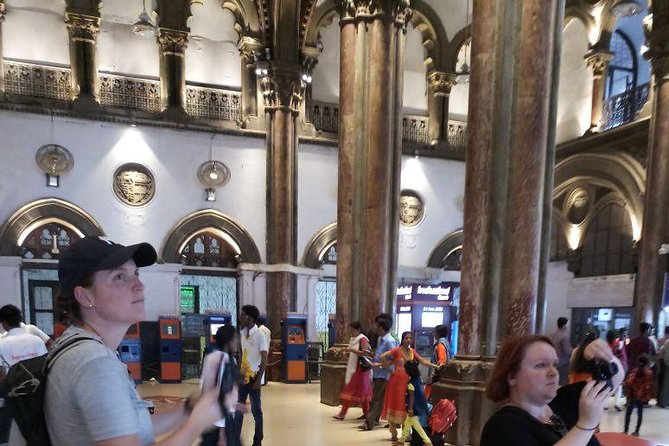
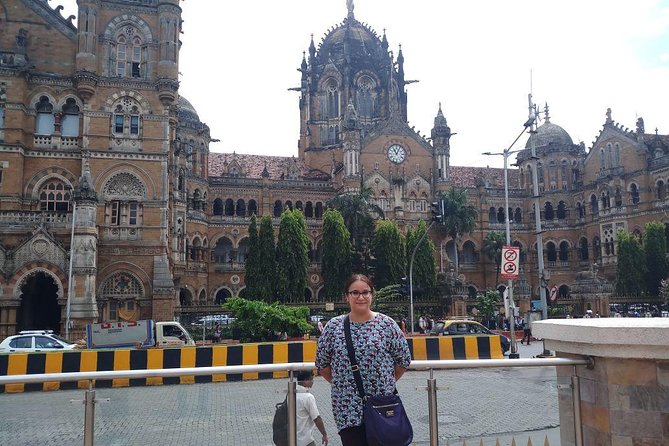
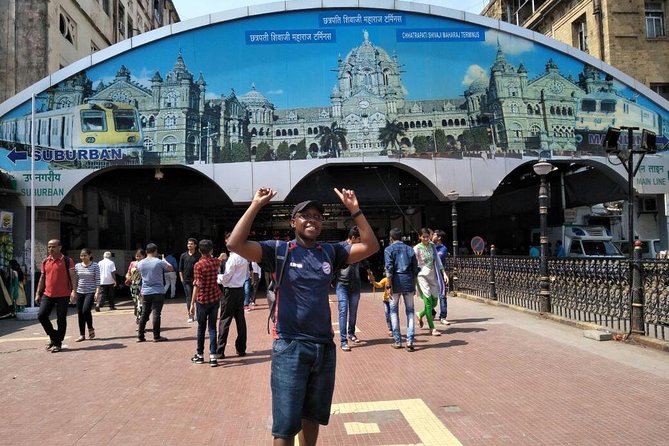
The first major stop is Chhatrapati Shivaji Terminus, often still called VT by locals. Its Gothic design includes carved stone friezes, stained glass, flying buttresses, and a central dome topped by a figure representing Progress.
The building was completed in the late nineteenth century to mark Queen Victoria’s jubilee. It also became the starting point for India’s first steam train to Thane, about 45 kilometers away. Today, electric trains carry a huge daily flow of commuters through the station.
You get about 20 minutes here, with admission included. That is enough for a quick look at the grand exterior and the station’s public role, but not enough for a lingering architectural study. Keep your camera ready, but also watch the movement around you. This is a working railway station, not a quiet museum.
The stop sets the tone for the day. Mumbai’s old imperial architecture is still in use, and the city’s past sits right beside its daily commute.
Marine Drive and the western sea
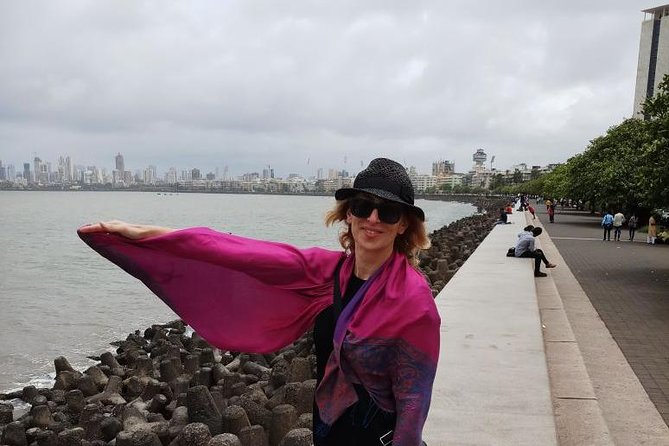
Marine Drive gives you a change of pace. This broad, curved boulevard follows the Arabian Sea for about three kilometers, linking Nariman Point with Malabar Hill. Its six-lane road is less important here than the long public promenade beside it.
You have about 25 minutes, with no separate admission charge. That short pause is designed for fresh air, coastal views, and a quick look at one of Mumbai’s best-known public spaces.
The route faces west-southwest, so the promenade is also associated with sunset views. Your exact experience will depend on the timing of the tour and the weather. Do not expect a long waterfront walk, but you should have enough time to get a sense of why Marine Drive is part of the city’s identity.
Gateway of India and Colaba by the water
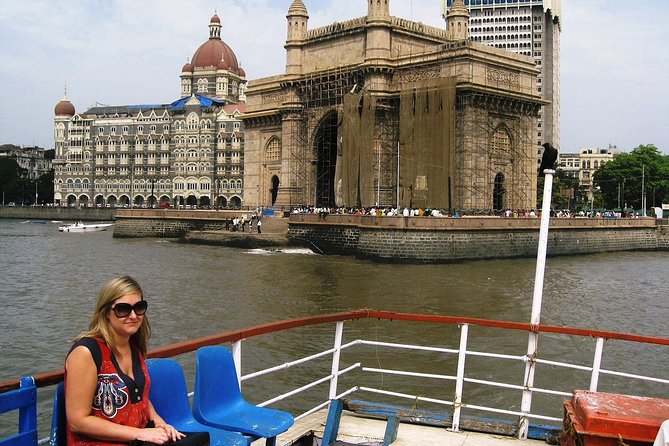
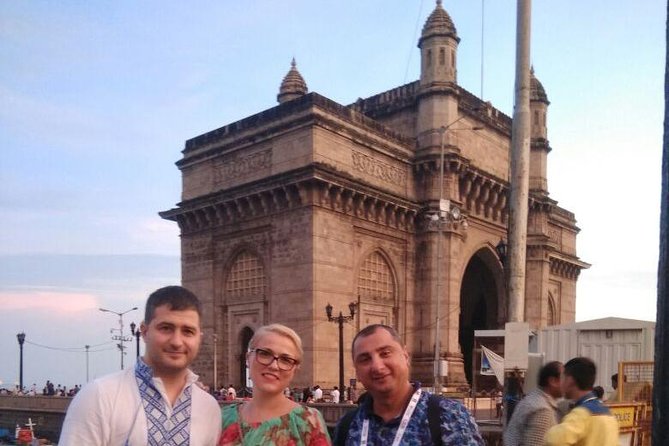
The Gateway of India is Mumbai’s famous yellow basalt arch, built to mark the visit of King George V and Queen Mary. Its four turrets and carved latticework give it a formal, monumental look.
Its later meaning is more complicated. The Gateway represented British rule, but it also became linked with the departure of the last British ships from India in 1947. Today it is a major public meeting point, with steps leading down toward the water.
You get about 25 minutes here, and admission is free. That gives you time to see the monument and the harbor setting, though the area can be crowded and active. Stay aware of the meeting point before wandering off for photographs.
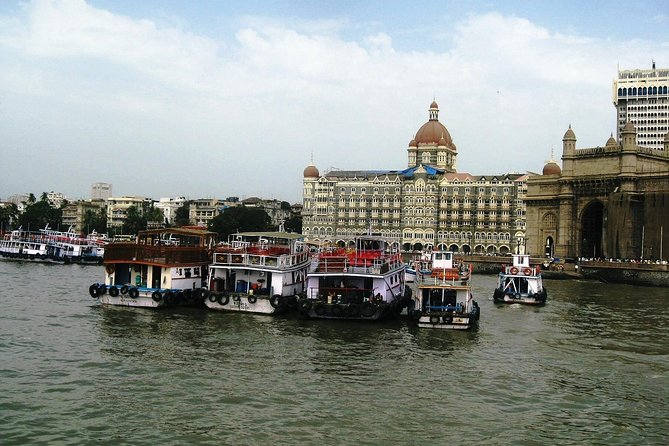
The tour then moves to Colaba and Apollo Bunder for a ferry ride along Mumbai’s coastline. The ferry portion lasts about 20 minutes and is included. This is one of the most useful parts of the route because it lets you view the city from the water instead of only passing it by road.
The ferry is short, so think of it as a city orientation ride rather than a full harbor cruise. Weather matters, and the tour can be changed or refunded if poor weather causes cancellation.
More City Tours in the world:
- New York City: Statue of Liberty & Ellis Island with Ferry
★ 4.6 · 18,683 reviews - Zurich: City Highlights Tour by Bus, Cable Car, and Ferry
★ 4.4 · 2,366 reviews - City Cruises Salem High Speed Ferry to/from Boston
★ 4.5 · 727 reviews - Melbourne City and Williamstown Ferry Cruise
★ 4.0 · 356 reviews
Mani Bhavan and the Gandhi connection
Mani Bhavan was Mahatma Gandhi’s Mumbai residence. This modest two-story building now contains a reference library with more than 2,000 books, photographs from Gandhi’s life, and personal items.
One of the most notable objects is a charkha, or spinning wheel, associated with Gandhi. The building offers a quieter, more personal stop after the open spaces of the Gateway and Marine Drive.
The visit lasts about 20 minutes, with admission included. That is enough to take in the main rooms and displays, but the stop is brief. If Gandhi’s political life is a major interest for you, you may wish you had longer.
For most people, Mani Bhavan works because it adds a human and political side to the city. You are not just seeing Mumbai’s grand buildings. You are also visiting a place tied to India’s independence movement.
Churchgate and the dabbawala system
At Churchgate Railway Station, the tour turns to one of Mumbai’s best-known working systems: the dabbawala network. A dabbawala collects freshly prepared food from homes, carries the lunch boxes through the city, and delivers them to office workers.
The system relies on teamwork, timing, and simple low-tech methods. The delivery workers are the key link, moving lunch boxes through the city and sorting them for their final destinations.
The activity includes a train ride and lasts about 50 minutes. This is important because you are not only hearing about the system from a guide. You are also using part of the railway network that helps make Mumbai’s daily movement possible.
The exact amount of live dabbawala action you see can depend on timing. The route is built around Churchgate station, so listen closely to your guide and stay with your group in the station. This is a working transport hub, not a staged performance.
I consider this one of the strongest parts of the tour. It connects the city’s famous reputation for efficiency with ordinary meals, office routines, railway platforms, and thousands of small daily movements.
Dhobi Ghat and the work behind clean clothes
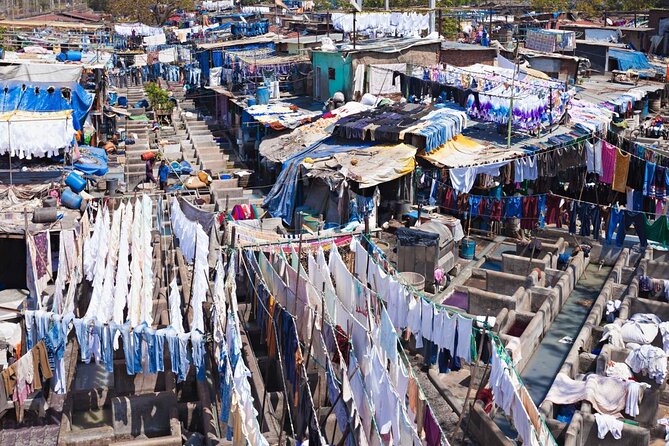
Dhobi Ghat is a large open-air laundry area where traditional laundry workers collect, wash, press, and return clothing. The wash pens are made of concrete, and each has a flogging stone used to beat dirt from the fabric.
Clothes are soaked in soapy water, washed against the stones, treated with starch, dried, ironed, and arranged into bundles. Nearly 200 dhobis and their families work together, with the occupation traditionally passed through families.
You have about 35 minutes here, and admission is included. The visit is mainly an observation stop. You can see the rows of wash pens and the rhythm of the work, but the time is limited.
This part of Mumbai can be easy to misunderstand if you look only for a colorful photo. Dhobi Ghat is a workplace and a home for the people connected to it. Follow the guide’s instructions, ask before taking close photographs, and keep the focus on the work rather than treating the area like a display.
The tour’s inclusion of Dhobi Ghat is valuable because it shows an old service still operating as part of modern city life. It also gives you a practical look at how laundry moves through Mumbai on a large scale.
Walking through Dharavi’s residential and commercial areas
The longest walking section takes place in Dharavi. The tour allows about one hour, with the full walk described as roughly one to one-and-a-half hours through both residential and commercial areas.
That distinction matters. You are not simply passing an area from a vehicle window. You are walking through streets where people live and work, with the guide explaining the parts of the community included in the route.
Dharavi is often described as one of Asia’s largest slum areas, but that label can flatten a complex place into one idea. A guided walk gives you a chance to see more than housing conditions. You may find a mix of homes, small businesses, workshops, and everyday commerce within a compact area.
The experience calls for respect. Keep your group together, follow your guide, and ask about photography rather than assuming. The tour data does not promise any particular workshop or business visit, so book this for the chance to understand the area through a guided walk, not for a guaranteed demonstration.
The physical side is clear. You need moderate fitness, comfortable footwear, and the ability to walk for at least an hour. Because the overall day can last up to 10 hours, Dharavi often comes after several other stops. Pace yourself early.
What the $85 price covers
At $85 per person, the value depends on how much of Mumbai you want to cover in one day. You are paying for a private tour, an English-speaking guide, an air-conditioned vehicle, lunch, ferry access, the train ride, listed admission fees, and taxes.
Booking separate transport and guides for CST, Mani Bhavan, Dhobi Ghat, and Dharavi could take more planning. The private format also gives you one point of contact for the day, rather than a chain of unrelated visits.
The meal is described as a budget Indian lunch. That is useful to know in advance. You are receiving a practical meal, not a restaurant-focused food tour. Alcoholic drinks are not included.
Group discounts are offered, so the per-person value may improve if you are traveling with several people. Since only your group participates, the tour can be a good fit for families, couples, or friends who prefer not to join a large bus group.
Timing, transport, and practical limits
The stated duration is approximately 7 to 10 hours. That wide range reflects Mumbai traffic, transfers, public transport timing, walking pace, and the number of people in your group.
Pickup is offered, and much of the day uses an air-conditioned vehicle. The ferry and train sections break up the car travel and give you a closer view of the city’s transport systems.
You should wear practical shoes and carry only what you need for a long day. The Dharavi walk is the clearest physical demand, but railway stations, ferry boarding, and short walks between stops add up.
The tour requires good weather. If poor weather causes cancellation, you are offered another date or a full refund. Otherwise, free cancellation is available up to 24 hours before the start time. Changes or cancellations inside that period are not refunded.
Who should book this Mumbai day tour?
I would choose this for a first visit, a short port stop, or anyone who wants a wide look at Mumbai without arranging eight separate visits. It is especially useful if you want monuments and public spaces balanced with working neighborhoods and public transport.
It also suits you if you prefer a private group and want an English-speaking guide to connect the stops. The guide’s role matters here because the value comes from context: why the station matters, how the dabbawala system functions, and how Dhobi Ghat and Dharavi fit into daily Mumbai.
I would think twice if you want a slow, photo-heavy day or dislike changing transport modes. The schedule is packed, the Dharavi walk is substantial, and several major sights receive only 20 to 35 minutes.
Should you book it?
Book this tour if you have one full day and want Mumbai in broad strokes: colonial architecture, sea views, Gandhi’s former residence, a ferry, a train, dabbawalas, Dhobi Ghat, and Dharavi. The combination is more useful than a standard monument-only circuit.
Skip it if your main goal is deep time at one museum, a relaxed coastal afternoon, or a long food-focused experience. At $85, the strongest value comes from the private guide, transport mix, included lunch, and sheer range of places covered. Just arrive ready for a long, active day.
FAQ
How long does the tour last?
The tour lasts approximately 7 to 10 hours.
How much does the tour cost?
The listed price is $85 per person.
Is this a private tour?
Yes. Only your group participates in the activity.
Is pickup available?
Yes. Pickup is offered.
What transportation is included?
The tour includes an air-conditioned vehicle, a ferry ride from Apollo Bunder in Colaba, and a train ride connected with the dabbawala activity at Churchgate.
Is lunch included?
Yes. A budget Indian meal is included.
Which Mumbai sights are included?
The route includes Chhatrapati Shivaji Terminus, Marine Drive, Gateway of India, Mani Bhavan, Colaba, Churchgate Railway Station, Dhobi Ghat, and Dharavi.
What level of fitness do I need?
A moderate level of physical fitness is recommended. The Dharavi portion includes a walking tour lasting about one to one-and-a-half hours.
What happens if the weather is poor?
The experience requires good weather. If it is canceled because of poor weather, you are offered a different date or a full refund.
Just added around the world
- Lake Como: Villa Carlotta Entry Tickets with Ferries★ 4.1 · 5 reviews
- Private Tangier Tour from Ferry /Cruise ship Including Lunch★ 3.8 · 12 reviews
- NYC: Brooklyn Bridge and DUMBO Tour with East River Ferry★ 4.9 · 28 reviews
- Old Town Alexandria in a Day with Round Trip Ferry Cruise★ 4.5 · 17 reviews
- Victoria & Butchart Gardens Tour with Gulf Island Ferry★ 4.0 · 7 reviews
- Vancouver False Creek Ferry Tour★ 5.0 · 32 reviews
- Photography, Hiking & Ferry to Bowen Island★ 5.0 · 29 reviews
- Salou to Cambrils Round Trip Ferry★ 4.5 · 7 reviews
Mumbai Ferry Trips, compared.
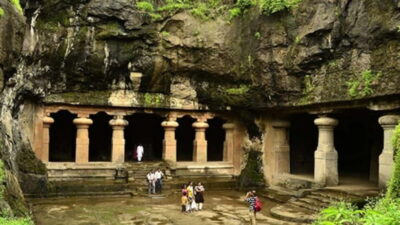
Elephanta Caves Exploration: Guided Tour with Ferry Experience
Read our review →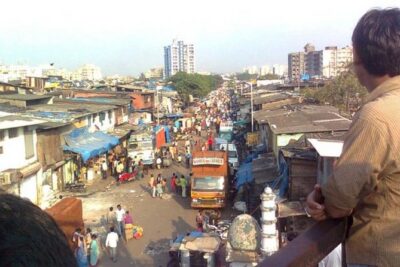
Mumbai City Tour with Ferry Ride and Dharavi Slum
Read our review →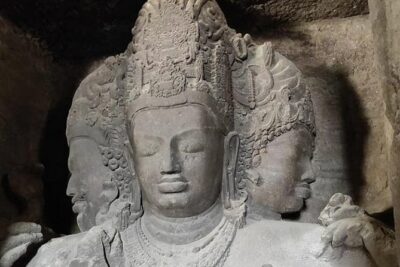
Private Bollywood Tours With Elephanta cave Inculiding Ferry Ride
Read our review →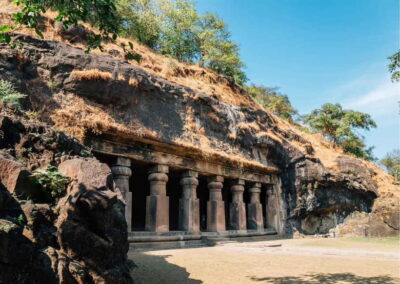
Half Day Elephanta Caves Guided Tour with Ferry Ride
Read our review →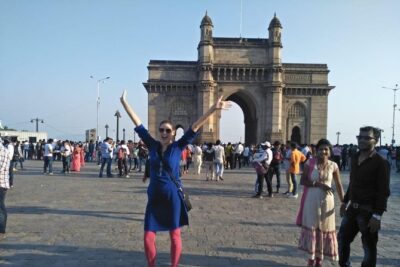
Private Full-Day Sightseeing Tour of Mumbai with Ferry ride
Read our review →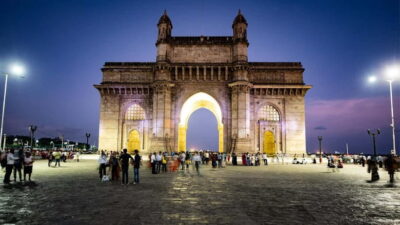
Browse the lists this tour appears in