
REVIEW · USA
Hawaii: Electric Hydrofoil Surfing Solo Lesson
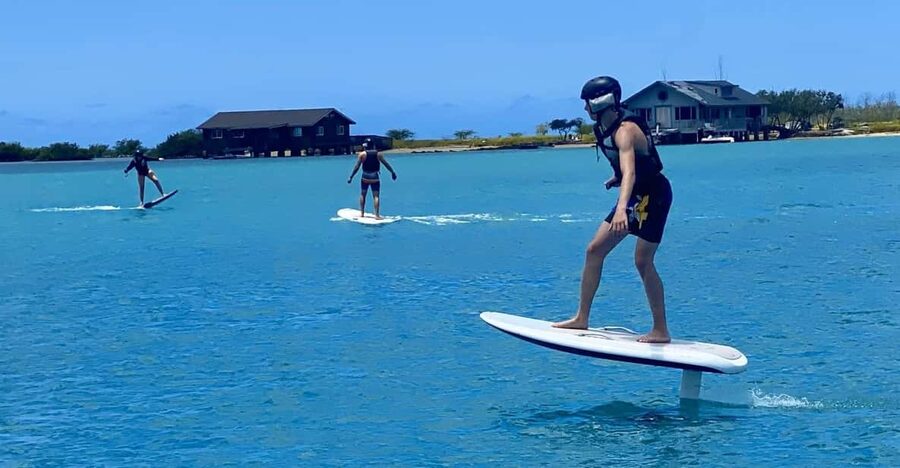
An electric hydrofoil board lets you rise above the water on a small underwater wing, creating a strange, smooth sensation that feels part surfboard, part flying machine. This 90-minute lesson makes that new skill less intimidating by breaking it into belly riding, knee riding, and standing.
I like the balance-board simulator, because it gives you a dry-land rehearsal before the real work begins. I also like the constant radio contact with the instructor, plus the slow, patient progression that lets you pop up only when you feel ready. The main consideration is the price: at $299 per person, this is a serious splurge for an activity that lasts an hour and a half.
Key Points
- Three riding positions: Learn belly down, knee riding, and standing before attempting full eFoiling.
- 60 minutes on the water: The remaining time covers safety instruction, fitting gear, and simulator practice.
- Radio helmet coaching: Keep communicating with your instructor while you ride.
- Safe first-lesson progression: Begin with remote control, turns, and emergency stops before chasing lift.
- No surf experience needed: Board-sports balance can help, but beginners are welcome.
- Important limits: You must be at least 10, comfortable in the water with a life jacket, and within the weight limit for your chosen lesson.
What Electric Hydrofoil Surfing Actually Feels Like
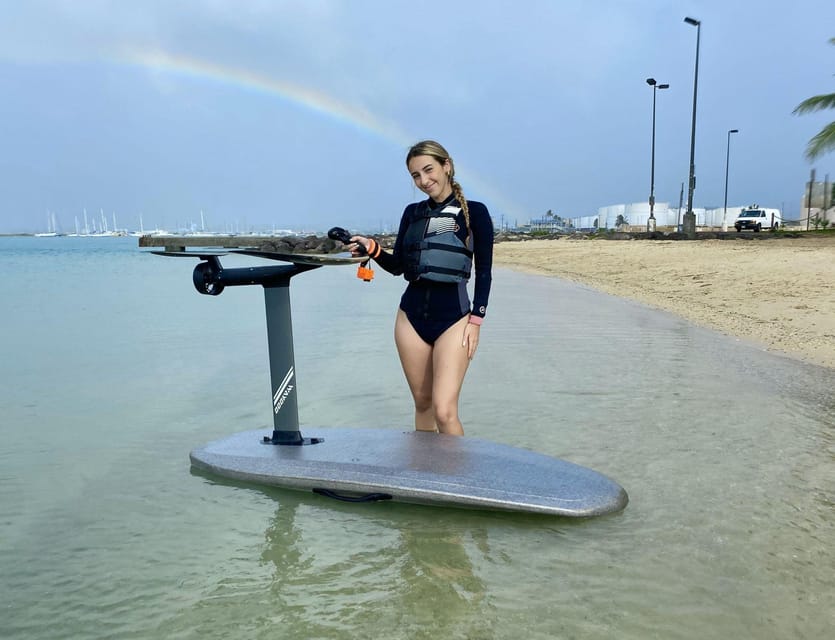
Electric hydrofoil surfing is not quite surfing in the usual sense. You do not wait for a wave or paddle into one. Instead, a battery-powered motor and underwater foil create forward movement, while a Bluetooth hand remote controls your speed.
At first, the board stays flat on the water. As you shift your weight back and gain speed, the foil lifts the board above the surface. That is the moment the activity changes from eSurfing to eFoiling, and it also explains why balance matters so much.
You will not be asked to stand immediately. The instructor first teaches you to control the board from your stomach, then from your knees, and only then from your feet. I like this order because it gives you useful practice before height and speed add extra pressure.
The experience is designed for beginners, not just surfers. You do not need previous surf experience, though experience with skateboards, wakeboards, snowboards, paddleboards, or similar activities may help you find your balance faster.
More Fast Boat and Speedboat Transfers in the USA:
- Ketchikan: Orca Cove Fast Boat and Sea Kayak Tour
★ 5.0 · 6 reviews - Fast Ferry – Haines Departure
★ 5.0 · 2 reviews - Boat Trip to Symi Island by Fast Boat
★ 5.0 · 975 reviews
The First 30 Minutes: Simulator, Safety, and Control
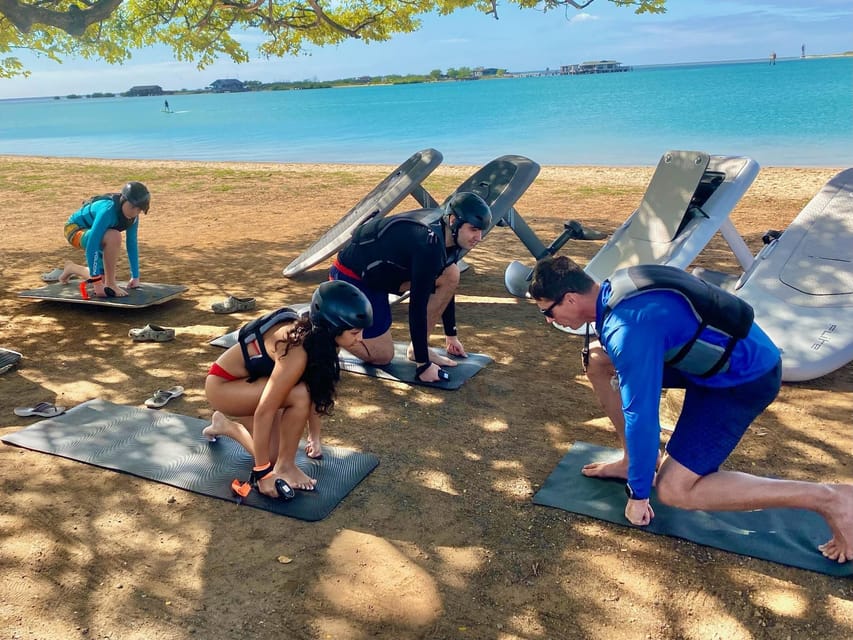
Your lesson starts on land with a full safety briefing and a balance-board eFoil simulator. This is more than a quick demonstration. You use it to practice controlling your center of gravity in the same three positions you will use on the water.
The simulator helps you understand a key part of eFoiling: small movements matter. Lean too far forward and the board stays down or noses into the water. Shift too far back and the foil may rise too quickly. The dry practice gives you a chance to feel these changes without also managing waves, speed, and a moving board.
You will learn the Bluetooth eFoil remote during this stage. The remote controls the motor, so you need to know how to start, adjust speed, and stop before riding out on the water. You will also learn how to fall away from the board safely, an important point since the foil and motor need to be treated with care.
The safety equipment includes a life jacket and whistle. You also receive a radio helmet, which allows constant communication with the instructor instead of relying on shouted instructions across the water.
That radio contact is especially useful for a first lesson. You can receive a quick correction while riding, rather than returning to shore after every mistake. It also helps the instructor guide you through speed changes, turns, and emergency stops as you build confidence.
Belly Riding Comes First
Water practice begins with belly rides. At this stage, the goal is not to get airborne. You are learning to manage the remote, move the board in a controlled way, and understand how the eFoil responds.
You will practice turning the board and stopping in an emergency. These skills may sound basic, but they are the foundation for the whole lesson. A beginner who can slow down and change direction has far more control than someone who only knows how to move forward.
Belly riding also lets you get used to the board’s speed. The instructor can help you find a pace that feels manageable before asking you to kneel. This is a practical approach for anyone who feels nervous about powered water equipment.
You should expect to spend some time repeating simple actions. The lesson is not built around racing through a checklist. The point is to make each position familiar enough that you can focus on balance rather than remembering every instruction at once.
Knee Riding Builds the Bridge to Flight
Once you can manage the board from your stomach, you progress to knee riding. This position raises your center of gravity and asks for more balance, but it remains lower and more stable than standing.
You will practice turns in the kneeling position and begin accelerating toward eFoiling speed. Here, you start to understand how the remote, your weight, and the foil work together. The instructor can help you adjust your speed while you learn how much pressure to place through your knees and hands.
The supplied experience information says all clients have managed to knee surf and stand during their first lesson, and most students reach confident eFoiling within 30 to 60 minutes. That is encouraging, but I would treat it as a target rather than a promise of effortless flight. Water conditions, comfort level, and your sense of balance will affect the pace.
The best feature of this progression is that you can pause at the kneeling stage. You do not have to force a standing attempt simply because the clock is running. If kneeling feels controlled, you have already made real progress and learned skills that carry directly into the next stage.
A few more ferry trips around the USA worth a look
- Helsinki-Tallinn All Inclusive Ferry Day Trip Business Class
★ 5.0 · 4 reviews - Tallinn-Helsinki All Inclusive Ferry Day Trip Business Class
★ 5.0 · 2 reviews
Standing Up Without the Usual Surf Pressure
The move to standing is handled as a slow pop-up. Unlike traditional surfing, you are not trying to catch a wave before it passes. The electric motor gives you time to set your feet and find your stance.
You will work out which foot feels natural in front and practice turning in both directions. That two-way practice matters because you do not want to become comfortable only on one side of the board.
The instructor may have you repeat a touch-and-go motion, rising briefly and then settling back down. This matches the simulator work and keeps the first attempts manageable. You shift your center of gravity gradually rather than making one large movement.
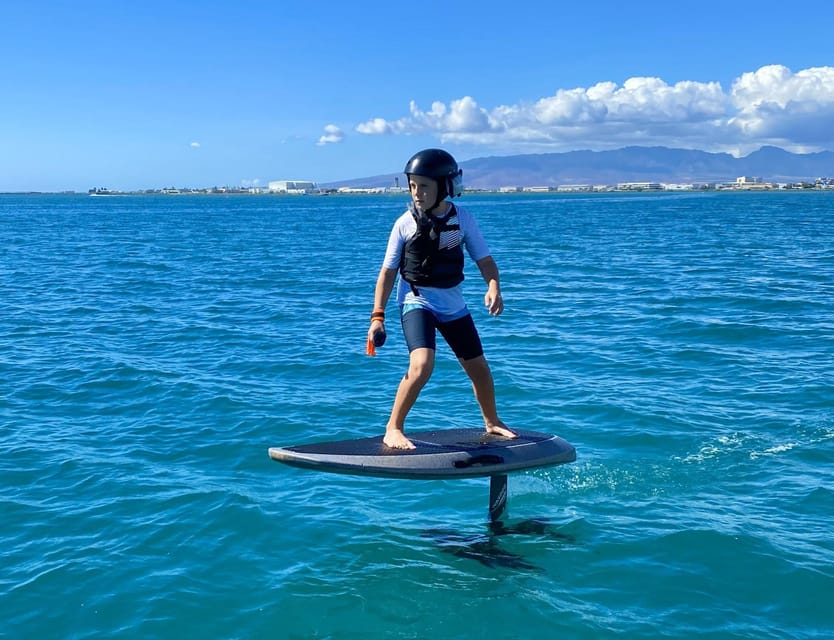
As you lean back slowly, the board begins to lift out of the water. The sensation can be surprising because the board becomes quieter and smoother once the foil takes over. At that point, your job is to make small corrections and avoid sudden movements.
I like that the lesson allows you to take your time. Standing up is often the moment when beginners tense their legs or grab at the remote. A slower pop-up gives you a better chance to find a stable stance before trying longer runs or sharper turns.
Turning, Stopping, and Finding Your Stance
Straight-line riding is only part of the skill. The lesson also gives you practice turning in both directions, which helps you learn how the board responds when your weight shifts from side to side.
Turns should begin at a controlled speed. Going too fast can make small balance errors harder to correct, while going too slowly may not provide enough lift for the foil. Your instructor uses the radio helmet to help you manage this balance between speed and control.
You will also practice emergency stops. This is one of the most useful parts of the lesson because it gives you a clear response if you lose balance or feel uncertain. Knowing how to stop can make you more willing to keep practicing.
The safe-fall lesson matters just as much. If you lose your balance, you learn to move away from the board rather than falling onto it. With a motor, battery, and foil under the board, that is a basic safety habit you should take seriously.
What the 90 Minutes Includes
The total activity lasts 90 minutes, with 60 minutes of water time. The other 30 minutes cover the land lesson, safety guidance, equipment fitting, and simulator practice.
That breakdown makes the session easier to understand. You are not paying for 90 uninterrupted minutes of riding, but the land portion is not wasted time. Without it, you would spend valuable water time learning the remote and trying to understand body position through trial and error.
All necessary eFoiling equipment is included. You receive a life jacket, whistle, and radio helmet, along with the board and related equipment needed for the lesson.
Transportation to and from the activity is not included. Food and drinks are also your responsibility. You should arrive with a hat, swimwear, and sunscreen, and plan your own way to the activity location.
The listed instructor language is English. The experience is described as a private group, while the lesson description also refers to a group lesson. If the exact group arrangement matters to you, confirm it when you reserve, since the supplied details use both terms.
Is $299 a Fair Price?
At $299 per person, this is not a casual add-on for most Hawaii trips. It is better viewed as a specialist lesson that includes a powered board, safety equipment, a simulator, and one-on-one style radio guidance during the water portion.
The value improves if your main goal is to learn eFoiling rather than simply try a water activity for a few minutes. You receive a structured progression, time to practice all three riding positions, and instruction designed for someone starting from zero.
The price may feel less attractive if you mainly want a scenic ride or a quick thrill. This experience asks you to learn a skill, repeat drills, and spend part of the session on land before you ride. It is active instruction, not a sightseeing cruise.
The claim that all clients have knee surfed and stood during their first lesson makes the price easier to justify for someone who wants a real introduction to the sport. Still, you should book with the right expectation: you may achieve full eFoiling, but your personal pace will depend on your balance and comfort in the water.
Who Should Book This Lesson?
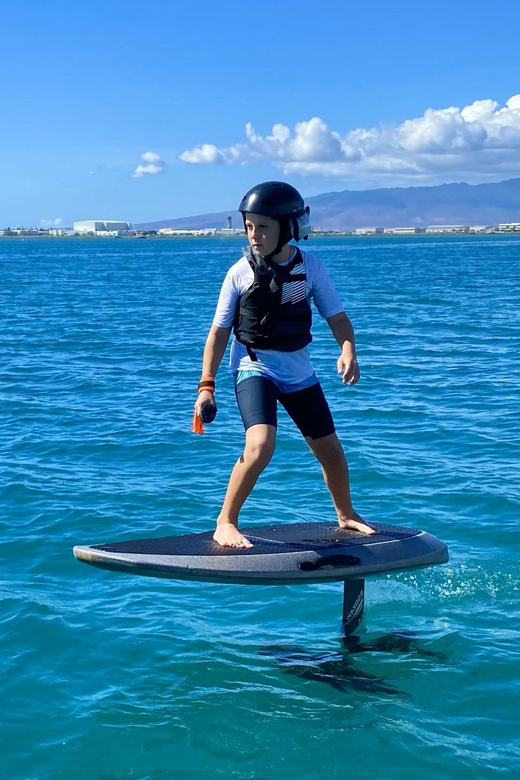
This suits an adventurous beginner who wants a clear introduction to eFoiling without needing previous surf experience. It is also a good match for someone who likes technical activities and does not mind practicing the same movement several times.
Board-sports experience can help you progress faster from eSurfing to eFoiling. Even so, the lesson is not limited to experienced riders. The simulator and three-position plan give beginners a way to build up step by step.
You need to be comfortable in the water while wearing a life jacket. The minimum age is 10, and the standard lesson has a 200-pound weight limit. Riders between 201 and 265 pounds can use an additional option for $49.
This is not suitable for pregnant women, people with back problems, or people with mobility impairments. Those restrictions are important because the lesson involves kneeling, standing, balancing, falling away from the board, and controlling a powered watercraft.
Practical Details Before You Reserve
Wear swimwear and bring sunscreen and a hat. You will spend 60 minutes on the water, so sun protection is not a minor detail.
The activity offers free cancellation up to 24 hours before the start time for a full refund. You can also reserve now and pay later, which helps if you are still arranging the rest of your Hawaii plans.
The lesson is available in English, and you should check the available start times before booking. Since transportation is not provided, leave enough time to reach the activity location on your own.
The most important preparation is mental rather than physical: expect to fall, reset, and try again. The lesson is built around safe repetition, not instant perfection.
Should You Book It?
Book this if you want to learn a new water skill and are willing to spend $299 for a structured first lesson. The simulator, radio helmet, safety training, and gradual shift from belly riding to standing give you a stronger start than simply renting equipment and guessing your way through it.
Skip it if you want a low-cost, passive activity, or if kneeling, standing, and falling in the water are not appealing. Also check the weight, age, health, and water-comfort requirements before paying.
For the right person, this is an exciting way to experience Hawaii from a different height. You may begin by crawling across the board with a remote in hand, then finish by lifting above the water and making your first controlled turn. That learning curve is the real reason to book.
FAQ
How long does the electric hydrofoil lesson last?
The activity lasts 90 minutes in total, including the land lesson and water instruction.
How much water time is included?
The lesson includes 60 minutes of total water time.
Do I need previous surfing experience?
No. Previous surf experience is not required, although board-sports balance can help you progress faster.
What positions will I learn?
You will practice riding belly down, knee riding, and standing.
What safety equipment is provided?
A life jacket and whistle are provided, along with a radio helmet for constant communication with the instructor.
What should I bring?
Bring a hat, swimwear, and sunscreen.
Is there a weight limit?
The standard lesson has a 200-pound weight limit. An additional option is available for participants weighing 201 to 265 pounds at an extra $49.
What is the cancellation policy?
You can cancel up to 24 hours in advance for a full refund. You can also reserve now and pay later.
Just added around the USA
- Washington DC: 1 or 2-Day Unlimited Water Taxi Pass★ 3.2 · 6 reviews
- NYC: Brooklyn Bridge and DUMBO Tour with East River Ferry★ 4.9 · 28 reviews
- Water Taxi to Private Secluded Beach around Chincoteague★ 5.0 · 2 reviews
- Old Town Alexandria in a Day with Round Trip Ferry Cruise★ 4.5 · 17 reviews
- Tampa Pirate Water Taxi Tour★ 4.5 · 20 reviews
- Explore Olympic National Park from Seattle through Van /Ferry★ 4.0 · 21 reviews
- Muir Woods Sausalito Entry & Ferry to Fishermans Wharf included★ 4.0 · 7 reviews
- Muir Woods and Sausalito + Ferry, Alcatraz Night Tour & Aquarium Access★ 4.0 · 3 reviews
USA Ferry Trips, compared.


Muir Woods and Sausalito (Return by Bus or Ferry)
Read our review →
Water Taxi All Day hop-on hop-off Venice of America Boat Tour
Read our review →
Fort Sumter Admission and Self-Guided Tour with Roundtrip Ferry
Read our review →
Boston to Martha’s Vineyard Day Trip with Optional Island Tour
Read our review →
Fort Sumter Entry Ticket with Roundtrip Ferry
Read our review →

Statue of Liberty and Ellis Island Guided Tour with Ferry
Read our review →Browse the lists this tour appears in